🤖 The Alberta government is downplaying concerns from local communities in their push for massive new resource-sucking data centres across the province
The Alberta government is bypassing impact assessments and avoiding genuine public consultation on proposals for upwards of 40 hyperscale AI data centres from the likes of Mark Zuckerberg, Kevin O'Leary and other predominantly foreign owners while downplaying the legitimate concerns of Albertans regarding the local impacts to the air, water, land and energy supply from these massive resource-sucking data centres.
A massive 1.2 gigawatt, 627-acre datacentre is proposed within close proximity to Calgary, so close that it could fall within Calgary’s city boundaries by the time it’s built.
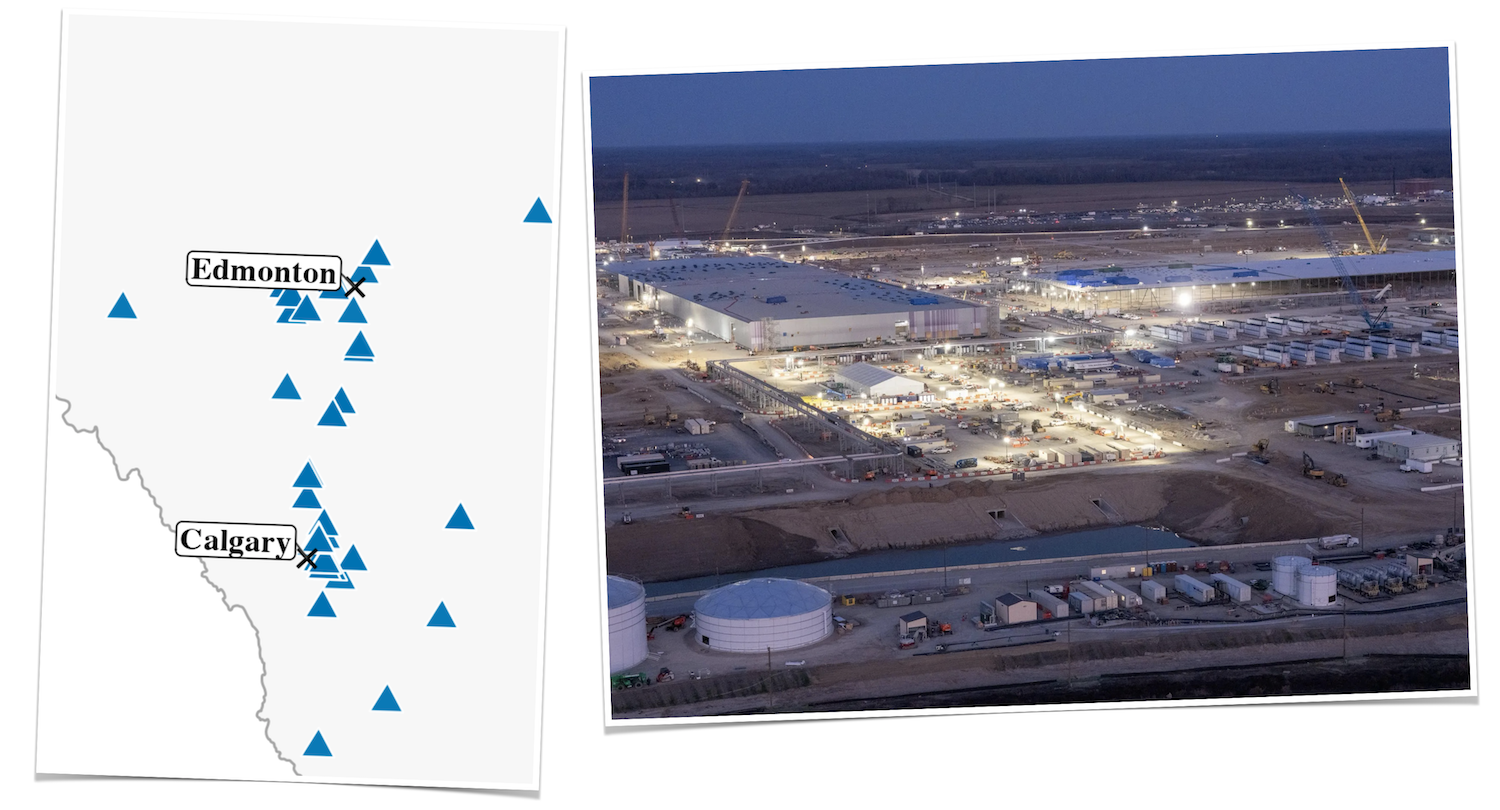
Left: Map of proposed data centres in Alberta (Source: York University). Right: Meta’s Louisiana datacentre under construction (New York Times).
🏫 Responsive local governments are pausing new AI datacentres
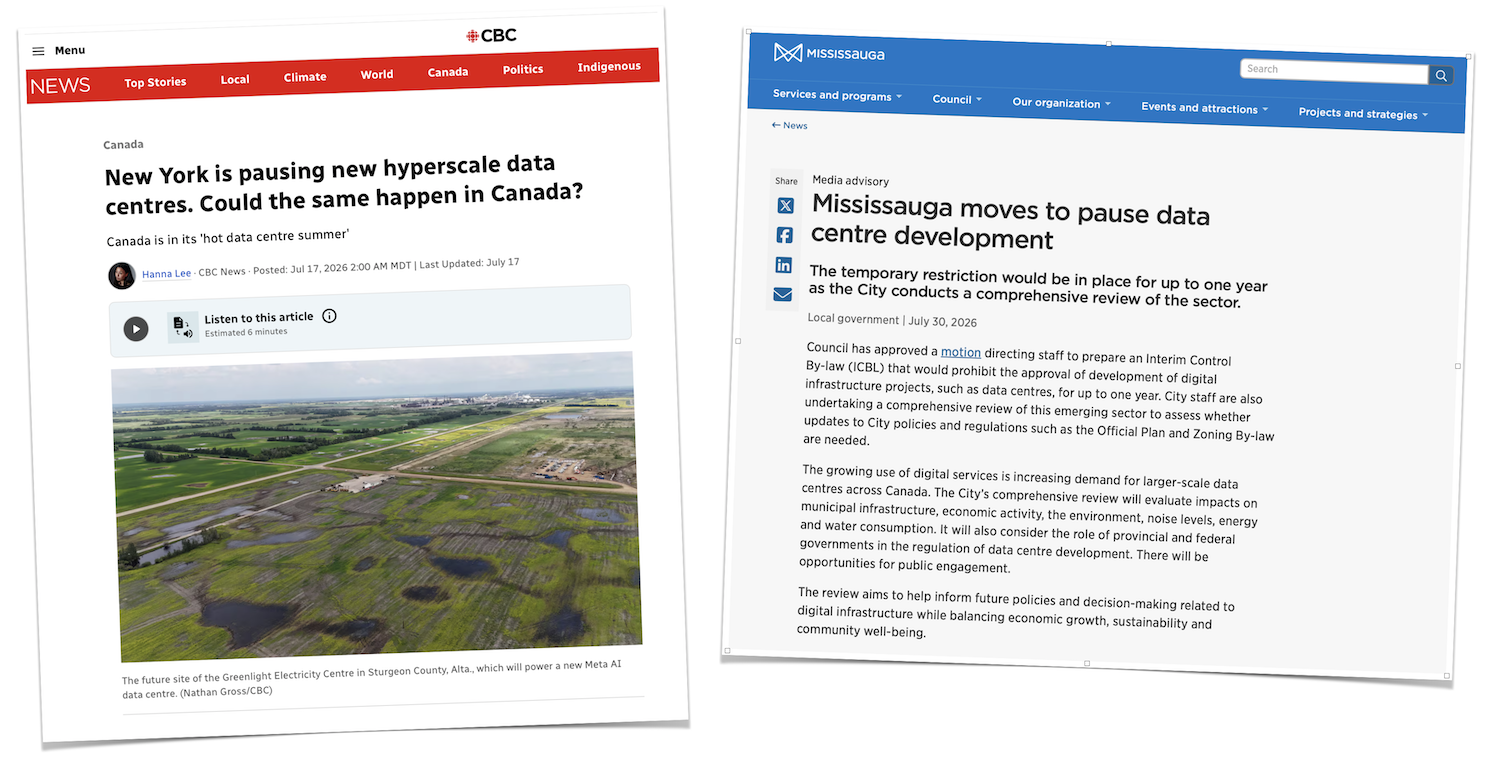
Citizens around the world are pushing back against new hyperscale data centres, which concentrate impacts locally while offering little economic benefit for the local economy. In response, more and more local governments are pausing new hyperscale AI datacentres including in New York, Seattle, Mississauga, Oakville, Winnipeg, Saskatoon, and even Rocky View County bordering Calgary.
These governments are taking the time to properly study the potential local impacts of these projects and ensure proper project assessments, regulations and bylaws are in place before considering new projects.
A recent survey found 71% of Albertans are in opposition to building large AI datacentres in their communities.
📈 AI data centres will drive up the cost of electricity and natural gas in Alberta

Over 20 gigawatts in new AI datacentres are proposed for Alberta. The recently announced Sturgeon County, Alberta (north of Edmonton) Meta AI data centre alone is expected to consume 1.8 gigawatt of electricity, more demand than the entire city of Calgary. It is also expected to begin operating years before the new dedicated gas-fired power plant is able to serve the data centre.
At the same time, Premier Smith is prohibiting new data-centres from building new renewable energy projects to run their operations. As a result, the CEOs of Capital Power and TransAlta in Alberta are both predicting a tripling of the local electricity prices thanks to the massive increase in demand from these datacentres. Albertans have historically paid the highest electricity rates in the country. The Pembina Institute is warning that the added natural gas demand from all the new gas-fired power plants could also drive up home heating costs for Albertans.
🚰 AI data centres will increase pressure on Alberta’s strained watersheds

Hyperscaler AI datacentres, like those proposed for Alberta, are known to consume billions of litres of water per year, despite employing water recovery technology. By 2030, the water consumption of AI datacentres is expected to match the needs of 1.3 billion people. Water scarcity in southern Alberta has long been predicted even before any hyperscale data centres were contemplated.
The Alberta Government is prohibiting new data centres from using renewable energy sources to power their facilities. Fracking for natural gas is already running parts of Alberta dry.
Data centres are also known to contaminate local water supplies. This year, a Meta AI data centre in Cheyenne, Colorado was linked to a rare bacteria found in the city’s water supply.
🏭 AI data centres will pollute local communities and accelerate fossil fuel-driven climate collapse
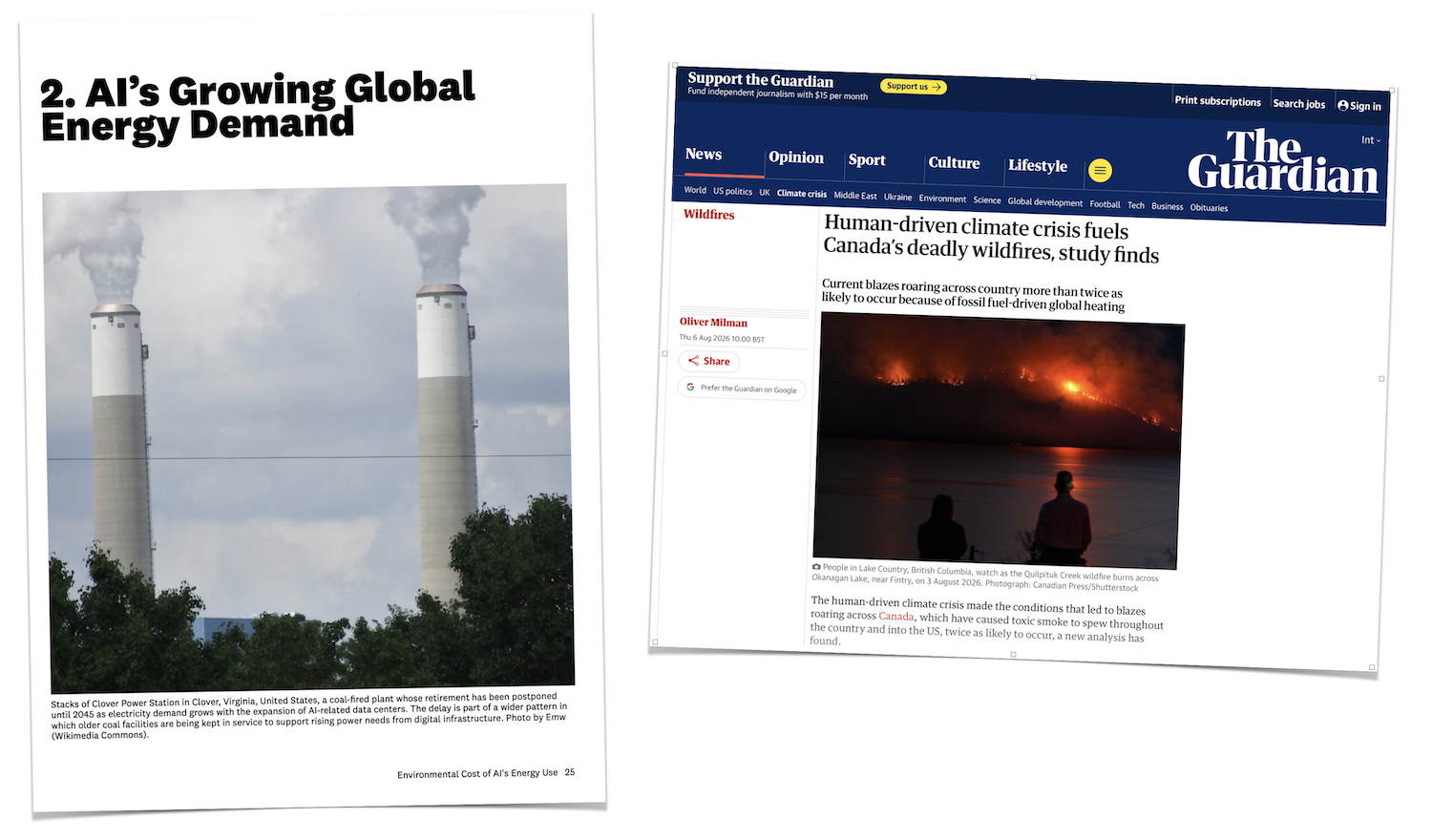
Communities around these new hyperscaler AI data centres are raising the alarm about constant noise, light and air pollution from these facilities. Residents living near a new datacentre in Massachusetts described the noise from the vast HVAC systems and banks of backup diesel generators "like putting a jet engine next to your bed." The increasing number of wildfire smoke days each year in Alberta has been primarily attributed to the burning of fossil fuels, which will be exacerbated by the massive increase in emissions from new gas-fired power plants planned for these datacentres.
🍁 American-owned AI data centres will not improve Canada’s data sovereignty

According to new research by York University, the majority of new large (100+ MW) datacentre projects in Canada are “tied to U.S.-headquartered providers, backers financiers, and end users.”
⚡️ Take Action: Help make Calgary the next city to stand up to the billionaires pushing their polluting, resource-sucking AI data centres on local communities
✉️ Email Calgary city council and demand a moratorium on new hyperscale AI data centres in and around Calgary until a full public cost benefit analysis is done, and necessary bylaws and regulations are put in place
AI data centres are not inevitable. Together, we have the power to force change through our local government, starting with Calgary City Council.
| EMAIL CITY COUNCIL |
📝Sign the Parliamentary e-petition for a federal moratorium on the approval, construction, expansion, or operation of proposed hyperscale AI data centres in Alberta
Make your voice heard with the federal government by signing the parliamentary e-petition.
🪧 Attend the August 22nd Protest Against AI Data Centres
Date: Saturday, August 22, 2026
Time: 1pm
Location: Calgary City Hall
Organizer: Alberta Anti-AI Group
📣Spread the word!
Share this post with your friends and family.
🤓Further resources
- VIDEO: Exposing The Dark Side of America's AI Data Center Explosion (Business Insider)
- Data Centred: the Shifting Landscape of Canada's Digital Infrastructure (York University)
- Environmental Cost of Artificial Intelligence: Carbon, Water and Land Footprints (United Nations University Institute for Water, Environment and Health)
- Smith’s Plan for a Huge AI Data Centre Alarms Experts (David Climenhaga, The Tyee)
- Exposing Alberta’s Wilful Blindness to AI Centre Harms (Andrew Nikiforuk, The Tyee)
- Alberta Data Centre Watch
- Alberta Anti-AI Group
- Olds Transparency Project
- The Making of an AI Data Centre Warrior (Andrew Nikiforuk, The Tyee)
- Resisting Data Centre Development in Canada (The Council of Canadians)
- Alberta Talks: Volunteer phone banking with the Alberta Environmental Network spread awareness about proposed hyper scale data centres in Alberta (Every Friday 2PM-5PM)
💬 Sample email text
Dear members of City Council,
The Alberta Government is rushing ahead with proposals for upwards of 40 new AI data centres in Alberta amounting to over 20GW of new gas-fired electricity generation, or roughly double the current electricity consumption of the entire province. Many of these proposed hyperscale AI datacentres are in close proximity to the City of Calgary, including the proposed 1.2-gigawatt, 627-acre Indus Datacentre Hub.
Albertans and Calgarians have plenty of reasons to be concerned. Hyperscale AI datacentres:
- use vast amounts of water and pose a serious risk to our scarce water resources;
- emit constant noise pollution and background hum, leading to hearing loss, insomnia, and cognitive impairment;
- emit light pollution leading to loss of dark skies;
- emit air pollution leading to acceleration of climate collapse, more wildfire smoke, and health complications including respiratory and cardiovascular disease;
- negatively home equity and livability of our communities.
While the Alberta Government is bypassing impact assessments and evading genuine consultation with Albertans, Calgary City Council also has an important role to play in local land use decisions and ensuring these projects do not go ahead until there has been adequate consultation and proper assessments, regulations, protections, processes, and bylaws are in place.
In 2025, Calgarians elected this city council to listen to Calgarians. That is why I am calling upon you to support a moratorium on new hyperscale AI data centre developments in and around Calgary.
Will you support this initiative?
I look forward to your response.
Thank you for your time.